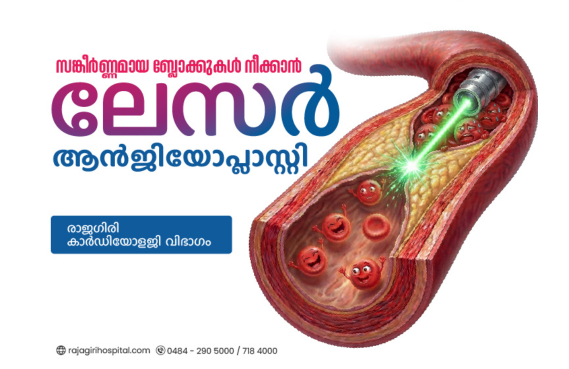
What is Laser Angioplasty? Procedure, Benefits & How It Works
What is Laser Angioplasty? Procedure, Benefits & How It Works
Heart diseases related to narrowed or blocked arteries are becoming increasingly common due to modern lifestyle habits such as stress, poor diet, and lack of physical activity. When arteries become restricted, the heart does not receive enough oxygen-rich blood, which can lead to serious complications. Many people are familiar with traditional angioplasty, but fewer understand the advanced option known as laser angioplasty.
Laser angioplasty is a modern, minimally invasive procedure designed to treat complex artery conditions with greater precision. It is especially useful in cases where conventional angioplasty techniques may not be effective. For patients and families trying to understand treatment options, knowing how laser angioplasty works can help them make informed decisions about their heart health.
What is Laser Angioplasty?
Laser angioplasty is an advanced form of angioplasty that uses laser energy to remove plaque buildup inside the arteries. Plaque is made up of fat, cholesterol, and other substances that can narrow or block blood flow over time.
Unlike traditional angioplasty, which mainly uses a balloon to push the blockage aside, laser angioplasty works by breaking down or vaporizing the plaque. This allows the artery to open more effectively, especially in complex cases such as hardened or long-standing blockages.
Laser Angioplasty Procedure – Step by Step
Understanding the procedure can help reduce fear and confusion. Although it sounds complex, laser angioplasty is performed using a structured and safe process.
1. Pre-Procedure Evaluation
Before the procedure, doctors perform tests such as ECG, blood tests, and imaging scans to assess the condition of the arteries. This helps in planning the treatment approach.
2. Catheter Insertion
A thin, flexible tube called a catheter is inserted into a blood vessel, usually through the wrist or groin. It is carefully guided toward the affected artery.
3. Positioning the Laser Device
Once the catheter reaches the blockage, a specialized laser tip is positioned precisely at the narrowed area.
4. Laser Activation
The laser emits controlled bursts of energy that break down plaque into smaller particles. These particles are then safely absorbed or washed away by the bloodstream.
5. Restoring Blood Flow
After clearing the blockage, blood flow improves significantly. In some cases, a stent may be placed to keep the artery open.
6. Completion and Monitoring
The catheter is removed, and the patient is monitored for a short period to ensure stability and recovery.
The entire procedure is minimally invasive and usually completed within a few hours.
How Does Laser Angioplasty Work?
Laser angioplasty works on a simple but highly effective principle—using light energy to remove obstruction inside the artery. The laser produces short pulses of high-energy light that interact with the plaque.
When the laser comes in contact with the blockage, it breaks it down at a microscopic level. Instead of pushing the plaque aside like a balloon, it actually removes or reduces the blockage, creating a smoother pathway for blood flow.
This precision makes it particularly useful in situations such as:
-
Hard or calcified plaques
-
Long-standing complete blockages (chronic total occlusions)
-
Tissue growth inside previously placed stents
-
Blood clots within the artery
Because of its ability to handle complex cases, laser angioplasty is considered a valuable tool in advanced cardiac treatment.
Key Clinical Applications
Laser angioplasty is widely used in advanced cardiac care to manage complex artery conditions that are difficult to treat with conventional methods.
Treating “Un-crossable” Blockages
Used when a standard balloon catheter cannot pass through or expand a severely narrowed or hardened artery (calcified lesion).
Managing Chronic Total Occlusions (CTO)
Helps open arteries that have been completely blocked for months or even years.
Treating In-Stent Restenosis (ISR)
Effectively removes tissue regrowth inside a previously placed stent that causes re-narrowing.
Dissolving Blood Clots (Thrombus)
Laser energy can break down large blood clots in coronary arteries, making it valuable in emergency cardiac situations.
Reducing the Need for Bypass Surgery
Provides a minimally invasive alternative for high-risk patients who may otherwise require open-heart surgery.
?? These advanced capabilities make laser angioplasty a powerful option in modern cardiac care.
Benefits of Laser Angioplasty
Laser angioplasty offers several advantages that make it an attractive option for both patients and doctors.
One of the biggest benefits is its minimally invasive nature, which means there is no need for open-heart surgery. This results in less pain, smaller incisions, and a lower risk of complications.
Another key advantage is precision. The laser can target specific areas without damaging surrounding tissues, making it ideal for complex or previously treated arteries.
Patients also benefit from faster recovery times. Most individuals can return to normal activities within a few days, compared to weeks required for surgical procedures.
Additionally, laser angioplasty can be used in situations where traditional methods fail, expanding treatment options and improving success rates for difficult cases.
Who Needs Laser Angioplasty?
Not every patient requires laser angioplasty, but it is recommended in specific conditions where advanced treatment is necessary.
Doctors may suggest this procedure for patients who have severe artery narrowing that cannot be treated effectively with balloon angioplasty alone. It is also useful for individuals who have had previous angioplasty or stent placement but are experiencing re-narrowing of the artery.
Patients with chronic total occlusions, where the artery has been completely blocked for a long time, may also benefit from this technique. In emergency situations, such as when blood clots are present, laser angioplasty can help quickly restore blood flow.
Ultimately, the decision depends on the patient’s overall health, the severity of the condition, and the recommendation of a qualified cardiologist.
Recovery After Laser Angioplasty
Recovery after laser angioplasty is generally smooth and quicker compared to traditional surgery. Most patients stay in the hospital for observation for two to three days.
After discharge, patients are advised to follow their doctor’s instructions carefully, including taking prescribed medications and avoiding strenuous activities for a short period. Light activities can usually be resumed within a few days.
Regular follow-up visits are important to monitor progress and ensure that the artery remains open. Adopting a healthy lifestyle, including a balanced diet and regular exercise, plays a crucial role in long-term recovery and prevention of future issues.
Risks and Safety
Laser angioplasty is considered safe when performed by experienced specialists in a well-equipped hospital. However, like any medical procedure, it may involve some risks.
Possible complications include bleeding at the insertion site, formation of blood clots, or re-narrowing of the artery over time. In rare cases, damage to the blood vessel may occur.
Advanced technology and careful monitoring help minimize these risks. Choosing a hospital with experienced cardiologists and modern facilities significantly improves safety and outcomes.
Why Choose Rajagiri Hospital for Advanced Cardiac Care?
Rajagiri Hospital in Kochi, Kerala, is a premier center for advanced cardiac care, recognized for its world-class facilities and high success rates in complex heart procedures.
Expertise in Laser Angioplasty: The hospital features a specialized team led by renowned experts like Dr. Vinod Thomas (Senior Consultant and Head of Cardiology), who specializes in complex multivessel angioplasties, including Laser Angioplasty, to help patients avoid open-heart surgery.
State-of-the-Art Infrastructure: The Rajagiri Cardiac Centre is equipped with advanced diagnostic and therapeutic equipment, including modern Cardiac Catheterization Laboratories, Coronary Care Units, and 3-D Echocardiography.
Comprehensive Cardiac Services: Beyond laser angioplasty, Rajagiri offers a full spectrum of care, including TAVI (Percutaneous Valve Replacement), Rotational Atherectomy, and treatments for Chronic Total Occlusion (CTO).
Conclusion
Laser angioplasty represents a significant advancement in the treatment of artery-related heart conditions. By using precise laser energy to remove plaque, it offers an effective solution for complex cases where traditional methods may not be sufficient.
For patients seeking a minimally invasive option with faster recovery and improved accuracy, laser angioplasty can be a highly beneficial choice. Understanding the procedure, benefits, and how it works allows individuals to make informed decisions about their heart health and treatment options.
FAQs
1. What is laser angioplasty?
Laser angioplasty is a procedure that uses laser energy to remove plaque from arteries and restore blood flow.
2. How is laser angioplasty different from regular angioplasty?
It removes plaque using laser energy, while traditional angioplasty pushes it aside using a balloon.
3. Is laser angioplasty painful?
The procedure is minimally invasive and usually not painful, as it is performed under local anesthesia.
4. How long does recovery take?
Most patients recover within a few days to a week.
5. Who is eligible for laser angioplasty?
It is recommended for patients with complex artery conditions or when traditional angioplasty is not effective.