Early Signs and Symptoms of Parkinson's Disease
Early Signs and Symptoms of Parkinson's Disease
Parkinson's disease is a progressive neurological disorder that affects movement, balance, and coordination. While many people associate Parkinson's disease with tremors, the condition often begins with subtle symptoms that can easily be overlooked or mistaken for normal aging.
Recognizing the early signs of Parkinson's disease is important because early diagnosis and treatment can help manage symptoms more effectively and improve quality of life. Understanding what to look for can help patients seek timely medical evaluation and access appropriate care.
In this guide, we explore the early symptoms of Parkinson's disease, why they occur, and when it may be time to consult a specialist.
Understanding Parkinson's Disease
Parkinson's disease develops when nerve cells in a part of the brain called the substantia nigra gradually lose their ability to produce dopamine. Dopamine is a neurotransmitter that helps regulate movement and coordination.
As dopamine levels decrease, individuals begin to experience symptoms that affect both motor and non-motor functions. These symptoms typically develop gradually and may vary from person to person.
Because Parkinson's disease progresses slowly, the earliest warning signs are often mild and may go unnoticed for months or even years.
What Are the Early Signs of Parkinson's Disease?
The earliest symptoms of Parkinson's disease are often subtle and may initially affect only one side of the body. While not everyone experiences the same symptoms, certain signs are commonly seen during the early stages of the condition.
Tremors
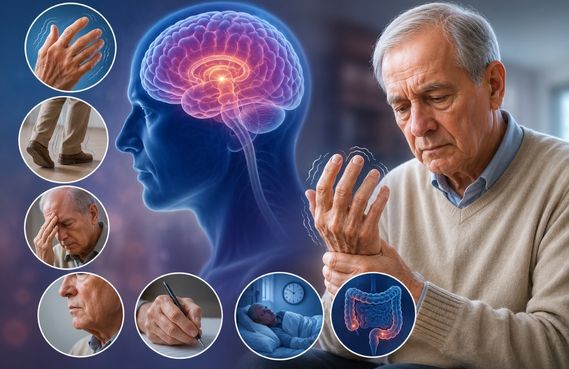
A resting tremor is one of the most recognizable symptoms of Parkinson's disease. It often begins in a finger, hand, or foot and occurs when the affected body part is at rest. The tremor may improve temporarily during movement but return when the muscles are relaxed.
Not all individuals with Parkinson's disease develop tremors, and the severity can vary significantly between patients.
Slowed Movement (Bradykinesia)
Many patients notice that routine activities take longer than before. Tasks such as buttoning a shirt, writing, walking, or getting out of a chair may become more difficult due to slowed movement.
Bradykinesia is considered one of the hallmark symptoms of Parkinson's disease and can have a significant impact on daily life.
Muscle Stiffness
Muscle rigidity may occur in the arms, legs, neck, or trunk. Some individuals experience persistent stiffness or discomfort that limits their range of motion.
This symptom can sometimes be mistaken for arthritis or other age-related musculoskeletal conditions.
Changes in Walking Pattern
People with early Parkinson's disease may notice subtle changes in their walking style. Steps may become shorter, arm swing may decrease, and movement may feel slower than usual.
As the disease progresses, balance and coordination can also be affected.
Changes in Handwriting
A noticeable reduction in handwriting size, known as micrographia, is a common early symptom. Handwriting may become smaller, cramped, or more difficult to read over time.
Many patients recognize this change before other symptoms become obvious.
Reduced Facial Expressions
Some individuals develop a reduced ability to express emotions through facial movements. Friends and family may notice that the person's face appears less expressive or "masked."
This occurs because Parkinson's disease can affect the muscles responsible for facial movement.
Early Non-Motor Symptoms of Parkinson's Disease
While movement-related symptoms often receive the most attention, Parkinson's disease can also cause several non-motor symptoms that may appear years before motor symptoms develop.
Loss of Sense of Smell
A reduced ability to detect or identify odors is one of the earliest warning signs reported by many patients.
Sleep Disturbances
Some individuals experience vivid dreams, restless sleep, or physically acting out dreams during sleep. These symptoms can sometimes occur years before a formal diagnosis.
Constipation
Digestive changes, particularly chronic constipation, are frequently observed in individuals who later develop Parkinson's disease.
Depression and Anxiety
Changes in brain chemistry can contribute to mood-related symptoms, including depression, anxiety, and loss of motivation.
Because these symptoms are not directly related to movement, they are often overlooked during the early stages of the disease.
When Should You See a Doctor?
Experiencing one symptom does not necessarily mean you have Parkinson's disease. However, persistent tremors, movement difficulties, balance problems, or multiple symptoms occurring together should be evaluated by a neurologist.
Early diagnosis allows doctors to develop a personalized treatment plan that can help manage symptoms and maintain independence for as long as possible.
Seeking medical attention promptly can also help rule out other neurological conditions that may produce similar symptoms.
How Is Parkinson's Disease Diagnosed?
There is no single test that confirms Parkinson's disease. Diagnosis is usually based on a detailed review of symptoms, medical history, neurological examination, and assessment of movement patterns.
A neurologist may evaluate muscle tone, reflexes, coordination, balance, and walking patterns to identify signs consistent with Parkinson's disease. Imaging studies may be recommended in certain situations to exclude other conditions.
Treatment Options for Early Parkinson's Disease
Although Parkinson's disease cannot currently be cured, early treatment can significantly improve symptom control and quality of life.
Treatment plans may include medications that help increase dopamine activity in the brain, physical therapy, occupational therapy, speech therapy, and lifestyle modifications such as regular exercise.
Many patients continue to lead active and productive lives for years with appropriate medical management and ongoing follow-up care.
When Is Advanced Treatment Considered?
As Parkinson's disease progresses, some patients may experience increasing symptoms or reduced effectiveness of medications. In such situations, neurologists may recommend advanced treatment options.
One of the most effective therapies for selected patients is Deep Brain Stimulation (DBS), a procedure that helps regulate abnormal brain activity responsible for movement symptoms. DBS can significantly improve tremors, stiffness, and movement-related difficulties in appropriately selected patients.
To learn more about treatment options for advanced Parkinson's disease, explore our guide on Advanced DBS Surgery in Kochi.
Conclusion
Recognizing the early signs of Parkinson's disease can lead to earlier diagnosis, timely treatment, and better long-term outcomes. Symptoms such as tremors, slowed movement, muscle stiffness, changes in handwriting, sleep disturbances, and loss of smell should not be ignored, particularly when they persist or gradually worsen.
If you or a loved one is experiencing symptoms suggestive of Parkinson's disease, consulting a qualified neurologist can help determine the cause and guide appropriate treatment decisions. Early intervention remains one of the most important steps in managing Parkinson's disease effectively.