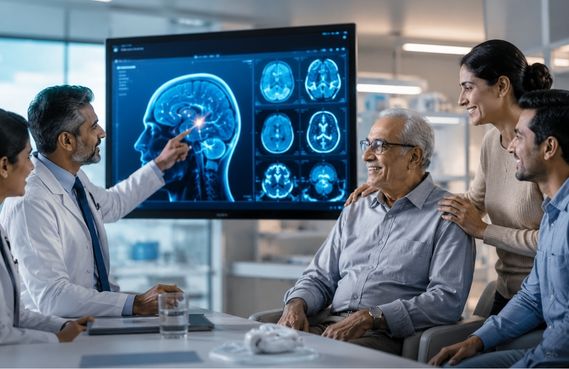
What is Deep Brain Stimulation (DBS)?
What is Deep Brain Stimulation (DBS)? Benefits, Risks and How It Works
Understanding Advanced Treatment for Parkinson's Disease
Parkinson's disease is a progressive neurological disorder that affects movement, coordination, and quality of life. While medications can effectively control symptoms during the early stages of the condition, many patients eventually experience fluctuations in symptom control or develop side effects associated with long-term medication use. As the disease progresses, advanced treatment options may be considered to help manage symptoms more effectively.
One of the most significant advancements in Parkinson's disease treatment is Deep Brain Stimulation (DBS). This innovative therapy has helped many patients regain greater control over their movements and improve their quality of life. If you are exploring advanced Parkinson's treatment in Kerala , you can learn more through Rajagiri Hospital's comprehensive guide on Parkinson's Treatment in Kerala.
What is Deep Brain Stimulation (DBS)?
Deep Brain Stimulation, commonly known as DBS, is an advanced surgical treatment used to manage symptoms of Parkinson's disease and certain other movement disorders. The procedure involves placing thin electrodes in carefully selected areas of the brain that are responsible for controlling movement. These electrodes are connected to a small device called a neurostimulator, which is implanted under the skin near the chest.
The neurostimulator delivers controlled electrical impulses to specific regions of the brain. These impulses help regulate abnormal brain activity that contributes to symptoms such as tremors, stiffness, slowness of movement, and difficulty with coordination. Because of its ability to regulate brain signals, DBS is often described as a pacemaker for the brain.
For patients seeking Parkinson's disease treatment options DBS may be recommended when medications alone no longer provide adequate symptom control.
How Does DBS Surgery Work?
The DBS procedure begins with detailed brain imaging and careful planning to identify the most appropriate target areas for stimulation. During surgery, neurosurgeons place electrodes into these precise locations. The electrodes are then connected to a neurostimulator implanted beneath the skin of the chest. Once the surgical site has healed, specialists program the device to deliver electrical stimulation tailored to the patient's symptoms and treatment goals.
The settings can be adjusted over time, allowing treatment to be personalized as the patient's condition changes. This flexibility is one of the key advantages of Deep Brain Stimulation when compared to other treatment approaches. Patients interested in learning more about the DBS surgery procedure can explore our detailed guide.
Benefits of Deep Brain Stimulation
For appropriately selected patients, DBS can provide significant improvements in symptom control and daily functioning. Many individuals experience a substantial reduction in tremors, improved mobility, and better control of involuntary movements. Patients often find that routine activities such as walking, writing, eating, and dressing become easier after treatment.
Another important benefit is that DBS may reduce the amount of Parkinson's medication required to manage symptoms. Although most patients continue to take medication after surgery, lower doses can help minimize medication-related side effects and improve overall quality of life.
Patients comparing DBS vs medication for Parkinson's disease can discuss the most suitable treatment approach with the movement disorder specialists at Rajagiri Hospital, Kochi.
Who May Benefit from DBS?
Deep Brain Stimulation is typically considered for patients with moderate to advanced Parkinson's disease who continue to experience disabling symptoms despite optimized medical therapy. Individuals who have severe tremors, motor fluctuations, or medication-related complications may be suitable candidates. A comprehensive neurological evaluation is essential to determine whether DBS is the right treatment option for a particular patient.
If you are wondering who needs DBS surgery, consultation with an experienced neurologist can help determine your eligibility.
Risks and Safety Considerations
Like any surgical procedure, DBS carries certain risks. Potential complications may include infection, bleeding, temporary speech difficulties, balance problems, or device-related issues. However, when performed by experienced neurosurgeons and movement disorder specialists at Rajagiri Hospital, Kochi, DBS is generally considered a safe and effective treatment with a strong track record of success.
Recovery After DBS Surgery
Recovery following DBS surgery is usually gradual and well managed. Most patients remain in the hospital for a few days after the procedure and return home once they are medically stable. The stimulation device is typically activated a few weeks later, after the surgical sites have healed. During follow-up visits, specialists adjust the stimulation settings to achieve the best possible symptom control. Many patients notice continued improvements over the weeks and months following treatment.
To understand the complete recovery after DBS surgery, patients should discuss expectations and rehabilitation plans with their healthcare team.
Does DBS Cure Parkinson's Disease?
Deep Brain Stimulation does not cure Parkinson's disease, nor does it stop disease progression. However, it can significantly improve symptom control, enhance mobility, and improve overall quality of life. For many patients, DBS offers an opportunity to maintain independence and participate more fully in everyday activities.
When Should You Consider DBS?
If Parkinson's symptoms are becoming increasingly difficult to manage despite medications, it may be appropriate to discuss advanced treatment options with a specialist. Understanding all available therapies is an important step toward making informed decisions about care.
To learn more about comprehensive Parkinson's treatment in Kerala and advanced therapies including DBS, consult the neurology and neurosurgery specialists at Rajagiri Hospital, Kochi.